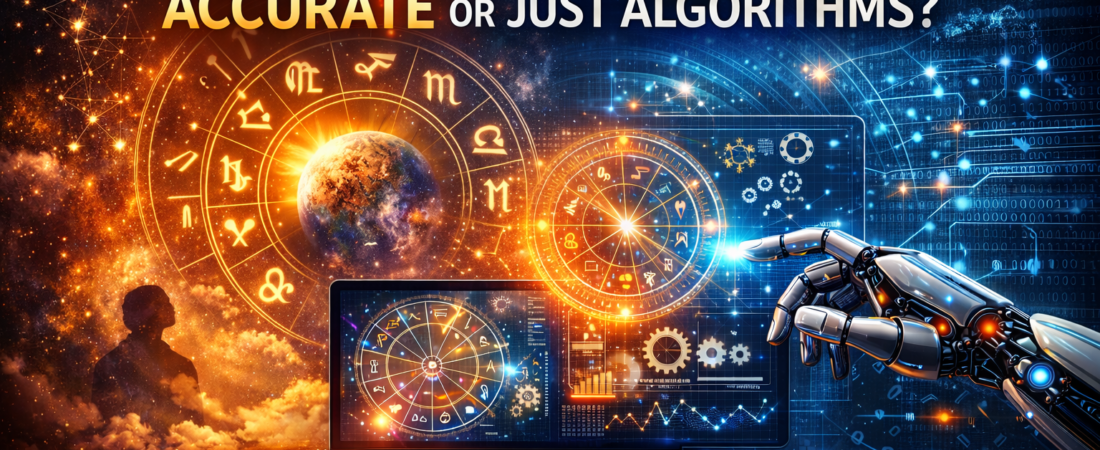
Astrology calculators have become a standard entry point for people exploring birth charts, zodiac compatibility, and personality patterns. With a few inputs, results appear instantly, often written with confidence and detail. This convenience naturally raises an important question. Are astrology calculators accurate, or are they simply algorithms presenting generalized descriptions?
The answer sits somewhere in between. Astrology calculators are neither random nor intuitive. They are structured systems built on astronomical data and interpretive logic. Their reliability depends on what kind of accuracy a user expects and how the results are understood. To assess astrology calculator reliability fairly, it helps to separate calculation precision from interpretation depth.
This article explains what astrology calculators do well, where their limits lie, and why their outputs should be read as structured insights rather than predictions.
What accuracy means in the context of astrology calculators
Accuracy in astrology calculators is often misunderstood. Many users assume accuracy means precise predictions or definitive personality descriptions. In reality, calculators are accurate in a technical sense but interpretive in outcome.
At the calculation level, most reputable astrology tools are highly precise. They use established astronomical datasets to calculate planetary positions at the moment of birth. These calculations are based on measurable celestial mechanics and rarely differ meaningfully between platforms when the same input is used.
Interpretation accuracy is a different matter. Astrology is a symbolic language, not a measurement science. Calculators translate planetary relationships into words based on predefined rules. These rules are chosen by developers and astrologers, which introduces variation without implying error.
How astrology calculators generate results
Astrology calculators follow a multi stage process. First, they convert birth date, time, and location into a universal time reference. This step accounts for time zones and daylight saving adjustments. Any mistake here affects everything that follows.
Next, the calculator determines planetary positions using ephemeris data. This identifies where each planet was located relative to Earth at the moment of birth. These positions form the foundation of the birth chart.
From there, astrology algorithms analyze relationships between planets, known as aspects. They also assign planets to zodiac signs and houses. Finally, interpretive logic converts these patterns into written descriptions.
The accuracy of the first two steps is scientific and verifiable. The accuracy of the final step depends on interpretive philosophy.
Why algorithms are not the same as randomness
Calling astrology calculators “just algorithms” can sound dismissive, but algorithms themselves are not inherently unreliable. An algorithm is simply a set of rules applied consistently. In astrology tools, these rules reflect centuries of symbolic tradition translated into modern logic.
Astrology algorithms do not generate content arbitrarily. They follow defined conditions. For example, if Venus forms a specific angle with Saturn, the algorithm triggers certain interpretive themes. The language may vary by platform, but the underlying pattern is consistent.
The limitation is not randomness but simplification. Algorithms cannot weigh life context, personal development, or emotional nuance. They apply the same interpretive rules to every user with similar charts.
Why astrology calculator reliability varies by platform
Not all astrology calculators are built the same way. Reliability differences often come from design choices rather than calculation errors.
Some platforms prioritize psychological interpretation and use cautious language. Others emphasize traditional astrology and use archetypal terms. Some include minor aspects and asteroids, while others focus only on major planets.
House systems also matter. A calculator using Whole Sign houses will produce different house placements than one using Placidus. Neither system is universally correct. Each reflects a different astrological philosophy.
Because of these variables, two calculators can both be internally consistent yet feel different to the user.
The issue with astrology predictions accuracy
One of the biggest sources of confusion comes from expectations around prediction. Astrology calculators are often mistaken for forecasting tools. While some calculators include transit or timing features, most are designed to describe tendencies rather than predict outcomes.
Astrology predictions accuracy depends heavily on interpretation depth and context. Calculators simplify this by necessity. They may describe potential challenges or strengths, but they cannot account for how a person responds to those patterns.
When users judge accuracy based on whether a prediction came true, they are often applying a standard the tool was never designed to meet.
Compatibility calculators and perceived accuracy
Compatibility calculators add another layer of abstraction. They compare two charts and summarize relational dynamics. To do this efficiently, they assign weights to certain planetary interactions and compress results into readable formats.
This process can feel authoritative, especially when presented as percentages or scores. However, these numbers represent relative emphasis, not relationship outcomes.
A zodiac compatibility calculator, such as the one found at zodiac-compatibility-calculator, demonstrates how complex relational patterns are translated into accessible insights. The accuracy lies in identifying interaction styles, not predicting success or failure.
Why users experience results differently
People often report mixed experiences with astrology tools. Some feel deeply seen, while others find descriptions vague or inaccurate. This difference is not random.
Astrology descriptions are symbolic and broad enough to apply to many experiences. How relevant they feel depends on self awareness, timing, and personal context. Someone actively reflecting on their behavior may recognize patterns more easily than someone reading passively.
Language also plays a role. Subtle wording differences can change how accurate a result feels emotionally, even when the underlying logic is similar.
The psychological value of astrology tools
Even skeptics often acknowledge the reflective value of astrology calculators. By framing tendencies and patterns, they encourage introspection. This does not require belief in prediction.
Astrology tools can function similarly to personality frameworks. They offer a structured way to think about behavior, motivation, and relationships. Their value comes from prompting insight rather than delivering truth.
Seen this way, astrology calculator reliability is less about correctness and more about usefulness.
Where astrology calculators fall short
Astrology calculators cannot adapt. They cannot ask clarifying questions or adjust interpretations based on feedback. They also cannot resolve contradictions within a chart beyond pre programmed priorities.
They are limited by the language chosen by their creators. Subtle human judgment, synthesis, and empathy are absent. This does not make them wrong, but it does define their scope.
Expecting calculators to replace nuanced interpretation leads to disappointment. Understanding their role prevents over reliance.
Using astrology calculators responsibly
Responsible use begins with accurate input. Exact birth time and location matter. When this information is approximate, results become more generalized.
Reading results critically is equally important. Instead of focusing on isolated statements, users benefit from noticing recurring themes. Comparing multiple calculators can reveal consistent patterns while highlighting interpretive differences.
Most importantly, results should be integrated with lived experience rather than accepted as external authority.

A balanced answer to accuracy questions
So are astrology calculators accurate or just algorithms? They are accurate algorithms operating within symbolic systems. They calculate celestial positions precisely and interpret them consistently according to chosen frameworks.
They are not predictive machines or psychological assessments. Their accuracy lies in pattern recognition, not certainty. When used with realistic expectations, they offer meaningful insights without demanding belief.
Frequently Asked Questions
Are astrology calculators accurate in a scientific sense?
Astrology calculators are scientifically accurate in calculating planetary positions using astronomical data. This part is measurable and precise. The interpretation of those positions is symbolic rather than scientific, which means accuracy depends on philosophical perspective rather than empirical validation.
Why do some astrology calculators feel more accurate than others?
Perceived accuracy often comes from language style and interpretive emphasis. Some calculators use cautious psychological wording, while others use stronger archetypal framing. Users tend to resonate more with descriptions that match their self perception, even when underlying calculations are similar.
Can astrology calculators make reliable predictions?
Most astrology calculators are not designed for prediction. They describe tendencies, patterns, and potential dynamics rather than specific future events. Predictive accuracy requires contextual judgment and synthesis, which automated tools cannot fully replicate without oversimplification.
Are astrology calculators better than human astrologers?
Astrology calculators offer consistency and speed but lack contextual awareness. Human astrologers can adapt interpretations, weigh contradictions, and respond to nuance. Calculators are best used as supportive tools rather than replacements for human interpretation.
How reliable are astrology compatibility calculators?
Compatibility calculators reliably highlight interaction styles and relational patterns based on planetary relationships. They are not reliable predictors of relationship success or longevity. Their value lies in identifying potential dynamics, not guaranteeing outcomes.
Do astrology tools work the same for everyone?
Astrology tools apply the same interpretive logic to anyone with similar chart patterns. Individual experience, awareness, and personal development influence how those patterns are expressed, which explains why results feel meaningful to some users and less relevant to others.
Should skeptics use astrology calculators at all?
Skeptics can use astrology calculators as reflective frameworks rather than belief systems. When approached analytically, these tools can encourage self observation and pattern recognition without requiring acceptance of prediction, fate, or fixed personality claims.